Friday, February 29, 2008

Is God real and relevant?

Veritas forum explores empirical proof of the Bible

By: Lindsey Coyne

Posted: 2/29/08

Last week, the Christian Faculty and Staff Network, along with several student organizations, had Texas A&M's annual Veritas forum. The Veritas forum, a nationally headquartered team, presents forums at universities across the nation in order to instill the relevance of Jesus Christ in all aspects of life. The forum took place on two evenings and featured two keynote speakers addressing the question and ultimate validity of God in the universe.

The first of these speakers, Walter Bradley, a professor of mechanical behavior of materials at Baylor University and former A&M professor of mechanical engineering, gave scientific evidence of the complex characteristics of the universe in his presentation, "The Bio-Friendly Universe: By Design?"

Bradley said his research in this field is to highlight "what about the universe makes it a place for complex life forms." His findings run the gamut of formulas and figures across chemistry, physics and genetics. Ultimately, the whole of the evidence provided by Bradley demonstrated that if there were an absence of certain value-specific universal constants, this planet would be incapable of supporting human life. Specifically, the values associated to the amount of "dark energy" present at the Big Bang is precisely what is needed for the universe to form. Bradley equates his interest and research in this field to his own personal beliefs in Christian deism. Within the past 15 years, everything he has found has reinforced his beliefs.

"Nothing about our universe is random, chaotic or purposeless," Bradley said, even though the deductions of past scientists suggest otherwise. Bradley co-authored a book, The Mystery of Life's Origins, based on these findings, and has presented this information in forums on more than 100 college campuses to more than 40,000 students nationwide.

Sherri Verm, a senior political science major, found the information contained in Bradley's presentation quite remarkable.

"I decided to attend because I found it very interesting that science and math could potentially work together to prove some element of theology," Verm said. She said she identified with the simple analogy Bradley offered the crowd about the chances of rolling a die 100 times and getting a six to make the emphasis about how unique, diverse and deliberate the constants of the universe actually are.

"Dr. Bradley's explanations have solidified my beliefs even more with unquestionable proof that there is a higher being at work in the universe," Verm said.

The second of the two featured speakers at the Veritas forum was A&M's Stephen McDaniel, professor of marketing and assistant department head in the Mays Business School. His presentation, "How Do We Know the Bible is True? Evidence from the Dead Sea Scrolls and Other Archaeological Findings," focused on the unearthing of the Dead Sea Scrolls and what they prove about the legitimacy of the Old Testament.

The scrolls, discovered in 1946 in a cave in Qumran near the northwestern part of the Dead Sea, have actually disproved numerous assumptions about the inaccuracy of Old Testament divinations. These scrolls include, among other biblical and archaeological findings, more than 230 copies of biblical texts and commentaries including the books of Habakkuk, Nahum, Psalms and Genesis. McDaniel highlighted two benefits in the findings of these scrolls.

"[Manuscripts] show how accurate scribes were in making copies of the Bible through the years," McDaniel said. "The scrolls validate Old Testament prophecies."

Critics of the provable existence of Jesus Christ have argued that prophecies about Jesus were added more than 900 years after his death, insinuating that New Testament scribes rewrote history to serve their beliefs in God. Once these scrolls were found and the Dead Sea Scroll Committee translated the manuscripts, they found prophecies about the birth and life of Christ that predate his existence by more than 100 years.

McDaniel, a self-professed researcher by nature, began his quest for the truth of these scrolls based on his need for empirical proof of his religious beliefs. He traveled to Qumran and took tours of Egypt and Israel to see firsthand the geographical setting of the biblical stories he had come to know so well. To this day, he has maintained his interest in the Dead Sea Scrolls as the discoveries about their content and subsequent evidence increase.

In attendance of McDaniel's presentation was Kristen West, marketing graduate student.

"His summary of the significance of the findings of the scrolls was what I appreciated the most," West said.

Another point that impacted West was the fact that the scrolls show prophetic evidence of the life of Christ years before he was born.

"The presentation enhanced my beliefs and gave me an accurate point of reference when describing my faith to someone else," she said.


© Copyright 2008 The Battalion


Tuesday, February 26, 2008

How to Destroy Your Marriage!

Marital Mistake: Igniting Fires with an Untamed Tongue

Dr. David B. Hawkins

Fire is one of those elements that can either be our friend, keeping us warm and dry, or our foe, creating incomparable damage. Likewise, the tongue can either encourage or destroy. As the Apostle James said, "With the tongue we praise our Lord and Father, and with it we curse men, who have been made in God’s likeness." (James 3: 9) James goes on to say the tongue is like a spark that can set a mighty forest ablaze.

Fire creates searing heat. Perhaps more destructively, however, is the fact that fire consumes the oxygen needed to survive. Fire robs us of life just as the tongue can set a mortal blaze in our marriages, stealing vitality from our life.

For any fire to continue it needs fuel. Thankfully, fire cannot burn on its own. I received a vivid lesson about fire and fuel one warm summer day when I was about ten years old. I was lying in the tall grass behind my house with a couple of buddies. With stalks of dried grass hanging out of our mouths we were telling stories and enjoying ourselves. Life couldn’t have been sweeter.

To ten-year olds, those stalks of grass were temptingly similar to a forbidden cigarette and one of us wondered what it would be like to "smoke" a few of those blades of grass. It all seemed innocent enough. We gathered our "cigarettes" and proceeded to light up. Suddenly, without warning, a spark caught in a bundle of dried grass, and then another, until we were faced with an inferno beyond our control. Realizing the potential danger of the fire, we ran for the help of my dad. Three screaming boys immediately caught his attention. We formed a "bucket brigade" and were able to douse the fire and get on to the next important issue—explaining all of this to my very angry father.

An innocent outing, an impulsive act, a furious outburst of potential danger. We contained the problem quickly and limited the damage.

Like that field, a marriage can become tinder dry at times, ready for a spark to ignite things. A season of dryness, or ongoing conflict, can set the stage for an angry outburst of deadly proportions.

"But, I just can’t help it," twenty-seven year old Karen said recently. "I just get so mad that I say what’s on the top of my mind. I know I can be extremely hurtful. We have called each other the most horrible names, and are embarrassed about it. We both have biting tongues, and know it."

Karen and Doug, clients of mine, were newly married and already having problems. I watched as Doug nodded his head to Karen’s rendition of the problem. I asked them to explain more about their problem.

"My husband and I can’t seem to agree on anything. I mention to him that I want more help around the house, and somehow we end up in World War III. I hate it."

"It’s true," Doug said soberly. "We don’t know how it happens, but when we fight, which is not all the time, it gets bad. We say things we would never say at other times, and we’ve nearly called it quits because of it."

"Well," I said slowly. "I have a saying—‘If it’s predictable, it’s preventable."

"It certainly is predictable," Karen said wryly. "The preventable part is questionable."

I could clearly see the pain Karen and Doug were in. They had hurt each other deeply with, impetuous, ill-spoken words.

"It takes a lot of self-control to slow things down enough to see what you two are doing so you can change the pattern."

"Doug is just as tired of my biting tongue as I am," Karen said.

"I can get pretty sarcastic and angry, too," Doug replied, "and we’re both tired of our bickering."

"Good," I said. "Being tired of how things are going is a great place for God to work in our lives. We have to get to the point where we are at our wits end—then God can step in."

We spent the rest of our session exploring the roots of their anger and biting tongues. We discussed how their anger and sharp words had caused tremendous pain in their marriage, to the point where they had nearly separated several times. It had scared both of them, and they wanted to learn new tools.

One of the tools I shared was "speaking from your most vulnerable self." This requires slowing down the process and exploring what other feelings could be shared rather than anger—which so often is hurtful. We discussed how anger is a secondary emotion, and how we need to look beneath the surface and learn to share other more vulnerable emotions that lay below the surface.

We discussed common underlying feelings known as GIFT:

• Guilt: anger often covers feelings of unexpressed guilt.

• Inferiority: anger often covers feelings of insecurity or inferiority.

• Fear: this is often an emotion that is difficult to express, but can be powerful when expressed appropriately.

• Trauma: conflicts often reawaken previous trauma in your life, creating hypersensitivity to an issue.

Karen and Doug seemed relieved to hear that their problems were normal and could be remedied. They agreed to slow things down when they became defensive, to guard their tongues and to look deeply to see if there were other, more vulnerable emotions needing expression. They agreed to take time outs when needed. It would take work, but they agreed to take these new insights home to practice.

Are you using an untamed tongue in your marriage? Have you said things you regret later? Consider taming your tongue. Recognize and own your primary feelings, practice some of the tools in this article, and allow God to heal problems without anger and harsh words. You’ll be glad you did.

Editor's note: Do you need sound, Biblically-based advice on an issue in your marriage or family? Dr. David will address questions from Crosswalk readers in his weekly column. Submit your question to him at TheRelationshipDoctor@gmail.com.
_________________________________________________________
This article was adapted from Nine Critical Mistakes Most Couples Make (Harvest House Publishers, 2005).

Dr. David B. Hawkins is a Visiting Professor at International Christian University and specializes in interpersonal relationship counseling as well as domestic violence and emotional abuse in relationships. He has been a frequent guest on Moody Radio Mid-day Connection, Focus on the Family, and At Home Live. You can visit his website at www.YourRelationshipDoctor.com.

I’m not the person for a job like that!

What are Your God-Given Abilities?

Dan Miller

Remember when God spoke to Moses at the burning bush? God told Moses he wanted him to go back to Egypt and lead the people out to the promised land. Moses looked and said – “You’ve got to be kidding – I’m not the person for a job like that.” God assured Moses he would prepare the way and he would provide some pretty convincing miracles. Still Moses had a hard time believing he was up to the task. He pleaded – “I can’t speak well, I don’t have a college degree, I’m a convicted felon – please, send anyone else!”

Now here we have someone with an obvious opportunity. Wouldn’t you like for God to lay out such a clear plan for you; and to promise success in advance. That wasn’t good enough for Moses. He kept trying to convince God he didn’t have any of the necessary requirements for accomplishing this big job. Moses said “they won’t believe me. I don’t have anything to qualify me for doing something great.” God said, “What is that in your hand?” If you don’t remember, it was his shepherd’s staff, which turned out to be a pretty significant part of his leadership. He turned it into a snake, parted the Red Sea with it and did some other pretty cool stuff.

If you think you’re stuck, don’t have any unusual talents, don’t have the right degrees, and don’t have the credibility to have people take you seriously – let me ask you a question: “What do you have in your hand?” What natural talents do you have? What is it that you do with excellence? Do you make beautiful candles? Delicious bread? Encourage the elderly? Grow stunning flowers? Handle your children with grace? You get the idea – just look at what you have right in front of you.

With God’s help you may already have everything you need for greatness. Don’t balk when you hear your call!


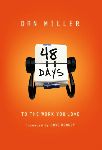
Dan Miller is President of The Business Source, founder of "48 Days" and author of 48 Days To The Work You Love and 48 Days To Creative Income. He is the growing authority for creating effective life plans that are achieved by integrating natural gifts, unique personality traits and one's own values and passions. His unique clarification of how God gifts us will introduce you to a new sense of freedom and fulfillment of your life's calling. For more information, visit http://www.48days.com/ .


Find this article at: http://www.christianity.com/christian living/features

How many people am I reaching out to?

Synergize! Attracts 2,100 Christians to Win the Next Billion

More than 2,100 Christian leaders from around the world descended upon Atlanta last week for a three-day conference to help empower church leaders to reach the next billion people for Christ.

Tue, Feb. 05, 2008 Posted: 15:20:15 PM EST


More than 2,100 Christian leaders from around the world descended upon Atlanta last week for a three-day conference to help empower church leaders to reach the next billion people for Christ.

The Second Billion Network’s semi-annual Synergize! Conference drew attendees from every state and almost 50 countries on Jan. 29-31. The Atlanta conference featured dozens of sessions led by top Christian and business leaders and highlighted a wide variety of methods and best practices used by pastors from around the world.

“Our 2,100 delegates not only heard from conference leaders about new and creative ways to engage their culture and grow and reproduce their churches, but they were also able to network with delegates from other cultures, countries and denominations and find out how some of those best practices worked,” said Dr. James Davis, founder and president of The Second Billion Network and co-host of the Synergize! Conference.

A highlight of the gathering was a talk by Pastor Sunday Adelaja, founder and pastor of the largest church in Europe, God’s Embassy Church in Kiev, Ukraine. The church has 30,000 members with a total membership, including all satellite locations in Ukraine, of 100,000.

Adelaja shared his insights into bringing the church into the seven spheres of influence – spiritual/social, government/politics, business/economy, education, media, culture/entertainment, and sports.

“If we infiltrate all these spheres of influence and their hundreds of subdivisions, we will have brought the kingdom lifestyle to a whole nation,” Adelaja said.

Another highlight was Truett Cathy, founder of Chick-fil-A, who shared how he succeeded in the business world with his Christian values.

Other conference speakers included Orlando Magic’s senior vice president Pat Williams, Malaysia’s Pastor Prince Guneratnam, and India’s Pastor David Mohan.

“What’s amazing about this vision of reaching the next billion people is that it compels us all to work together,” said Leonard Sweet, a noted American Christian leader, theologian and author.

“Synergize: Bringing the Best to the Rest” conferences will be held around the world in the next 14 months, according to the Second Billion Network.

The Second Billion Network is an international church growth and church planting collaboration of pastors, leaders and denominations whose goal is to begin to double the size of the Church through five million new churches plants throughout the world and to bring to Christ the next billion people.

The network seeks out ministry partners, enlists leaders, shares resources, and provides leadership training to network churches and pastors to achieve the goal of a billion new Christians in the next 15 years.

Michelle A. Vu
Christian Post Reporter

Report: More than Half of Britons Have No Religion

More than half the British people admitted they have no religious adherence, revealed a new U.N. report published this week.

Sat, Feb. 23, 2008 Posted: 13:04:27 PM EST


More than half the British people admitted they have no religious adherence, revealed a new U.N. report published this week.

Unlike the 2001 National Census conducted by the United Kingdom – which said nearly 72 percent of the population is Christian – the 23-page U.N. report, published Thursday, showed that two-thirds of the population claims no religious affiliation, according to UK newspaper The Times.

The report by U.N. special rapporteur on freedom of religion or belief, Asma Jahangir, called for the disestablishment of the Church of England because it no longer reflected “the religious demography of the country and the rising proportion of other Christian denominations.” Jahangir contends the role and privileges of the Church of England should be challenged given the new statistics on the state of religion in the United Kingdom.

The treatment of Muslims living in Britain and the government’s battle against terrorism was another topic of focus in the report.

According to the report, there is an “overall respect for human rights and their value,” but it cited research that shows 80 percent of Muslims in Britain feel they have been discriminated against. In particular, the report criticized a terrorism act that allows police in some areas to stop and search people without having to show reasonable suspicion, according to The Times.

From 2004 to 2006, there has been an 84 percent increase in searches of people with “Asian appearance” under this act, compared to an increase of 24 percent for white people, the report noted.

U.N. special rapporteur Jahangir, although a strong proponent in the belief that religion should not be given a lower priority than other rights, acknowledged in the report that some religious laws are “unacceptable.” She said the argument by some Muslim leaders that their religious tradition should override the rights of women is “unacceptable.”

Just a day before the report was published, the Archbishop of Canterbury also said some of the ways that Sharia laws were practiced were “appalling.”

“What I was trying to say the other day is that Sharia law is a very, very wide-ranging scheme of legal understanding within historic Islam,” the Archbishop said at a public lecture in Great St Mary’s Church after being criticized for saying that some parts of Sharia could be integrated into the British legal system.

“It is rooted in the sense of doing God’s will in the ordinary things of life,” Williams said. “[But] in some of the ways it has been codified and practiced across the world, it has been appalling.”

Williams specifically criticized the way the system applied to women in countries such as Saudi Arabia.

Jahangir, 55, was twice the chair of the Human Rights Commission of Pakistan and was released from house arrest in Lahore in November. She has faced punishment under her own government for her outspoken human rights advocacy and for criticizing the government’s human rights violations. Jahangir has been attacked by Islamic radicals for what they consider her liberal stance on religion.

Ethan Cole
Christian Post Reporter

Preach the Word - in season and out of season - and during the Olympics season!

China Won't Ban Bibles at Olympics, Assures Evangelist

Christian evangelist Luis Palau is encouraging Christians to bring their Bibles to the Summer Olympics in China, claiming that the Chinese government is 'wide open' and will not stop visitors from bringing Scripture into the officially atheistic country.

Fri, Feb. 22, 2008 Posted: 13:00:32 PM EST


NEW YORK – Christian evangelist Luis Palau is encouraging Christians to bring their Bibles to the Summer Olympics in China, claiming that the Chinese government is "wide open" and will not stop visitors from bringing Scripture into the officially atheistic country.

"I have asked officially from people here and over there. Any person can go in there and take Bibles, as long as they're not selling them," Palau told The Christian Post in an interview on Thursday.

"If they're giving them away, they can take all the Bibles they want. And I think that's going to happen. And I think that's very valuable."

Palau's comments come after China persecution watchdogs criticized the Chinese government last November for listing the Bible as one of the banned items in the Olympic Village.

A Chinese foreign ministry spokesman Liu Jianchao, however, clarified that China's law "will guarantee religious freedom during the Olympics," but not allow Bibles to be brought in for "distribution or propaganda," reported Agence France-Presse. According to the official, athletes, journalists, and tourists will be allowed to bring worship items, including the Bible, for personal use.

Palau, who was in New York City this week to promote his new book, A Friendly Dialogue Between An Atheist and A Christian, said he doesn't think Christians will face much opposition from the People's Republic of China during their stay there.

"I'm encouraging people to book their flights because it's going to be jammed. And to get a hotel and bed and breakfast because it's going to be jammed with people," he said.

"But they're going to be free, they're not going to be stopped to express the Gospel, to preach," he assured.

He added, "They were afraid that the athletes would start. Athletes are there to play and win, you know. But they may witness for Christ like some Chinese athletes do."

The Chinese government is known for its repressive religious policies, which prohibit worship outside state-approved venues and forbid proselytizing. It is not unusual to hear reports about Christians being detained and harassed by police for defying the regulations.

Palau, however, is more optimistic. He said that his Gospel message in China has never been censored, although many persecution watchdog groups note that his addresses have been in government-sanctioned churches.

Despite being very open about his future plans in China, one obstacle Palau said he did encounter was permission to hold an open-door evangelistic rally in China.

While he looks forward to such a rally in China by the time the Summer Olympics arrive in Beijing in July, Palau said that for now he will just have to wait for approval by Chinese officials.

"I believe you ask for permission, from my perspective as a foreigner coming to a foreign country," he explained.

"They have said to me, 'Be patient. Keep coming back. In China, we'd like to befriend a person, get to know them, trust them'... So, we're looking forward to it any day now."

The Argentina-born evangelist even joked that he has personal reasons for wanting to hold the rally in China soon.

"I said to one of the ministers ... 'You know, I can't wait forever. I'm getting old, you know? You’ve got to give me my chance.'"

If the rally is permitted in China, Palau said he plans to hold it in one of the major cities: Shanghai, Beijing, Nanjing, or Hangzhou.

In the meantime, Palau will be promoting his book, which released this month in the United States, and preparing for his next festival to be held March 14-15 in Buenos Aires, Argentina .

Palau's book was first released in China in August 2006 under the title, Riverside Talks: A Friendly Dialogue Between An Atheist and A Christian. In the book, Palau and Zhao Qizheng, an atheist and former spokesman for Communist China's Cabinet, share their unique perspectives on the Bible, philosophy of religion, history and politics. It became a national best-seller in China and is the first-ever book between a Chinese diplomat and a Christian evangelist.

Katherine T. Phan
Christian Post Reporter

Is Evangelical Christianity growing?

Jehovah's Witnesses, Mormons fastest-growing 'churches' in US

by Lillian Kwon, US Correspondent
Posted: Thursday, February 21, 2008, 13:08 (GMT)

The two fastest-growing church bodies in the United States and Canada, according to a newly published report, are ones whose beliefs are known to conflict with traditional Christian teaching.

Jehovah's Witnesses and the Church of Jesus Christ of Latter-day Saints, regarded by many Christians as cults, reported the largest membership increases in a year, according to the National Council of Churches' 2008 Yearbook of American & Canadian Churches.

Although Jehovah's Witnesses currently rank 25th in size with over 1.06 million members, they reported a 2.25 per cent increase in membership since the publication of the 2007 Yearbook. The Church of Jesus Christ of Latter-day Saints – also known as the Mormon church – grew 1.56 per cent and is listed by the NCC as the fourth largest 'church'.

Notably, however, both Jehovah’s Witnesses and the Mormon church are not accepted within many Christian circles as part of the larger Body of Christ over a number of controversial beliefs that the two religions hold.

The identification of Jehovah's Witnesses as Christian is debated largely due to their rejection of the Trinity, which most Christians regard as a fundamental doctrine. Latter-day Saints, meanwhile, are often criticised for their belief in “divine” books of scripture, aside from the Bible, including the Book of Mormon, the Doctrine and Covenants, and the Pearl of Great Price.

Mormonism was formally listed under “cults and sects” by the Southern Baptist Convention – the largest Protestant denomination in the nation – but was more recently categorised among “newly developed religions” on the North American Mission Board apologetics page.

Other bodies in the newly published top 25 largest churches list that reported membership increases include the Catholic Church with a 0.87 per cent increase; the Southern Baptist Convention with a 0.22 per cent increase; the African Methodist Episcopal Zion Church with a 0.21 per cent rise; and the Assemblies of God with a 0.19 per cent growth.

The greatest losses in membership were reported by the Episcopal Church, which dropped 4.15 per cent in members, and the Presbyterian Church (USA), which decreased by 2.36 per cent. Both denominations are currently wracked by theological differences and the issue of homosexuality.

American Baptist Churches in the USA and the Evangelical Lutheran Church in America also experienced large losses in membership, dropping 1.82 per cent and 1.58 per cent, respectively.

"Some will wish to argue that the slowing growth rate is evidence of an increasing secularisation of American postmodern society," said the Rev Dr Eileen W Lindner, editor of the Yearbook. "While such an explanation will satisfy some, caution in drawing such a conclusion is warranted."

Lindner also observed that churches are feeling the impact of the lifestyles of Millenials – people in their 20s and 30s – who attend church but resist becoming members.

The United Methodist Church saw a 0.99 per cent decrease but the mainline group remains the third largest church body with nearly 8 million members.

Only three of the top 10 largest churches are mainline Protestant churches; three of the top 25 are Pentecostal churches; and six of the top 15 are historic African American churches.

Largest 25 Churches (ranked by membership)

1. The Catholic Church – 67,515,016
2. Southern Baptist Convention – 16,306,246
3. The United Methodist Church – 7,995,456
4. The Church of Jesus Christ of Latter-day Saints – 5,779,316
5. The Church of God in Christ – 5,499,875
6. National Baptist Convention, U.S.A., Inc. – 5,000,000
7. Evangelical Lutheran Church in America – 4,774,203
8. National Baptist Convention of America, Inc. – 3,500,000
9. Presbyterian Church (U.S.A.) – 3,025,740
10. Assemblies of God – 2,836,174
11. African Methodist Episcopal Church – 2,500,000
12. National Missionary Baptist Convention of America – 2,500,000
13. Progressive National Baptist Convention, Inc. – 2,500,000
14. The Lutheran Church - Missouri Synod (LCMS) – 2,417,997
15. Episcopal Church – 2,154,572
16. Churches of Christ – 1,639,495
17. Greek Orthodox Archdiocese of America – 1,500,000
18. Pentecostal Assemblies of the World, Inc. – 1,500,000
19. The African Methodist Episcopal Zion Church – 1,443,405
20. American Baptist Churches in the U.S.A. – 1,371,278
21. United Church of Christ – 1,218,541
22. Baptist Bible Fellowship International – 1,200,000
23. Christian Churches and Churches of Christ – 1,071,616
24. The Orthodox Church in America – 1,064,000
25. Jehovah’s Witnesses – 1,069,530